AI or Offshoring? ANZ's Dilemma in Canberra
ANZ's CEO denies AI-related job cuts in Parliament, while Qantas faces 'AI washing' accusations and Barclays links cuts to AI. India and the Philippines are in the mix.
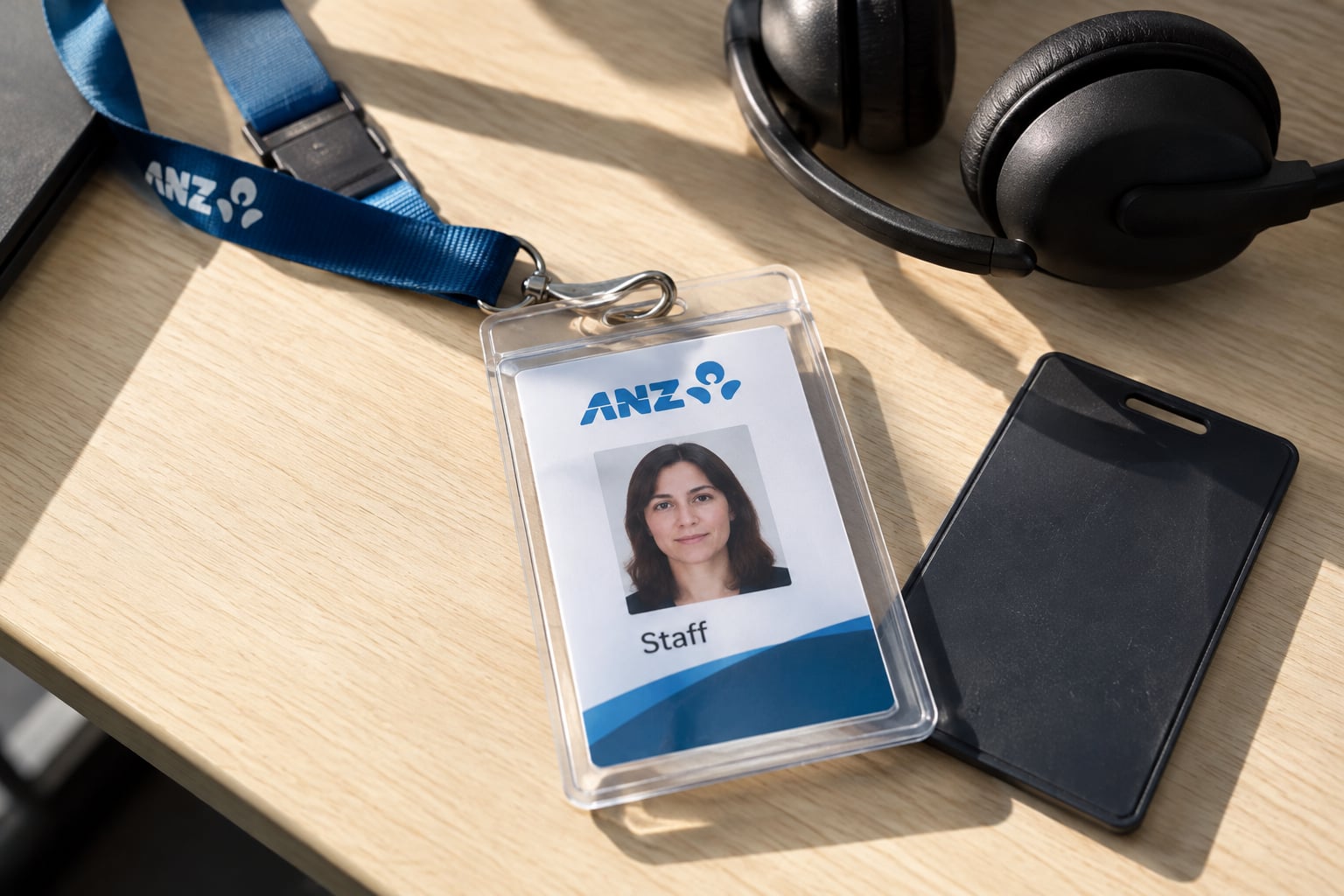
During a session of the Australian House of Representatives' economics committee in Canberra on November 12, ANZ CEO Nuno Matos stated that none of the bank's recent job cuts were caused by artificial intelligence. During the same hearing, he acknowledged that he could not guarantee that there would not be AI-related losses in the future and outlined an extreme scenario: if cuts of up to 50% occur, "we will have a crisis, and it will not be in Australia, it will be a global crisis." Shortly before this, ANZ had completed a program eliminating 3,500 positions, announced in September 2025.
The committee, chaired by MP Ed Husic, is investigating job cuts linked to AI and offshoring. Of the approximately 40,000 employees at ANZ, about 18,000 are in Australia, 7,000 in New Zealand, and up to 9,000 in India and the Philippines, according to the AAP agency. Matos responded that offshoring has been an industry practice for decades and that the bank's offshore workforce had decreased by 600 people in 2026.
The "AI Washing" Accusation
In the same week, Reuters published a survey on Australian companies accused of "AI washing," using AI as a public justification for cuts motivated by other factors. The central case is Qantas, which announced the elimination of 850 roles and the outsourcing of corporate areas such as finance, procurement, HR, and marketing to Accenture, primarily in India, describing the change as an "AI-driven" restructuring. Senator Barbara Pocock of the Greens expressed concern seeing large companies practice "AI washing." According to Uri Gal, a professor at the University of Sydney Business School, Qantas's decision seems like conventional outsourcing. Qantas did not respond to the criticisms.
The survey also mentions WiseTech and Atlassian, which attributed job cuts to AI, and Telstra, which eliminated positions linked to an AI joint venture with Accenture, with part of the work going to India.
The Same Suspicion, with the Signal Reversed
In London, the script runs in the opposite direction. On October 22, while presenting third-quarter results, Barclays CEO C. S. Venkatakrishnan confirmed around 5,000 cuts in 2026, nearly 5% of the workforce, stating that 60% of these "refer to support roles, including fewer developers, as AI makes our staff more productive." The Unite union accused the bank of "using AI as an excuse." In Canberra, the bank denies AI, and politicians accuse it of hiding it; in London, the bank mentions AI and the union calls it a pretext.
The symmetry suggests that the debate is on the wrong axis. The public attribution of a cut is chosen for the audience: investors reward the narrative of productivity through AI, while parliaments and unions punish the same narrative. In the cases of Qantas and Telstra, a single contract with the same consulting firm delivers both aspects simultaneously, the relocation of work and the layer of automation over it. Asking whether the cut was "AI or offshoring" separates what the contract has already combined.
What Weighs Against This Reading
Hard data on AI replacement remains scarce. The Reserve Bank of Australia states that AI has not yet caused widespread job losses, only "tentative signs of adjustment," with job vacancy announcements weakening in more exposed occupations. Venkatakrishnan himself, when asked how many cuts were directly from AI, pointed to investment in infrastructure and process simplification, summarizing: "AI is the icing on the cake, not the cake." Furthermore, the reduction of 600 positions in ANZ's offshore operation contradicts the notion that every domestic cut translates to hiring in India. Categorizing every cut as AI commits the same error as categorizing none.
India and the Philippines: Destination and Target
In India and the Philippines, the Australian discussion has another interpretation. The roles that Qantas transferred to Accenture—finance, procurement, and HR—belong to the same family of support roles that Barclays focuses 60% of its AI productivity-related cuts on. The up to 9,000 ANZ employees in India and the Philippines occupy precisely this range. If Matos's scenario gains any scale, the centers currently receiving work taken from Australia and the UK are on the front lines.
This places consultancies in a position that the Canberra inquiry has yet to examine. Accenture appears in two of the cited cases as the vehicle for the transfer and is the same company selling automation. The question that Husic's committee asked banks—whether the cut is AI or offshoring—has a more challenging successor for any board signing such a contract: who, according to the contract's wording, retains the savings when the work that crossed the ocean is automated at the destination.
Sources
- bloomberg.comhttps://www.bloomberg.com/news/articles/2026-11-12/anz-ceo-matos-warns-of-global-jobs-crisis-without-ai-rules
- hcamag.comhttps://www.hcamag.com/au/specialisation/hr-technology/big-bank-boss-warns-ai-job-cuts-could-spark-a-global-crisis/597092
- examiner.com.auhttps://www.examiner.com.au/story/9390178/big-four-bank-boss-defends-sending-jobs-offshore/
- insurancejournal.comhttps://www.insurancejournal.com/news/international/2026/11/12/892331.htm
- srnnews.comhttps://srnnews.com/australian-companies-face-ai-washing-claims-after-wave-of-job-cuts-offshoring/
- itv.comhttps://www.itv.com/news/2026-10-22/barclays-to-cut-5000-jobs-this-year-as-ai-makes-work-more-efficient
- techradar.comhttps://www.techradar.com/pro/barclays-to-cut-5-000-jobs-while-handing-work-over-to-ai-chief-executive-says-ai-is-icing-on-the-cake