Blackstone Acquires 75% of AWS Data Centers Valued at $5B
BXDC holds majority in 13 buildings in Indiana and Mississippi, leased back by AWS for 12 years at 7% cap rate. This operation sets a financing model for cloud expansion off-balance sheet.
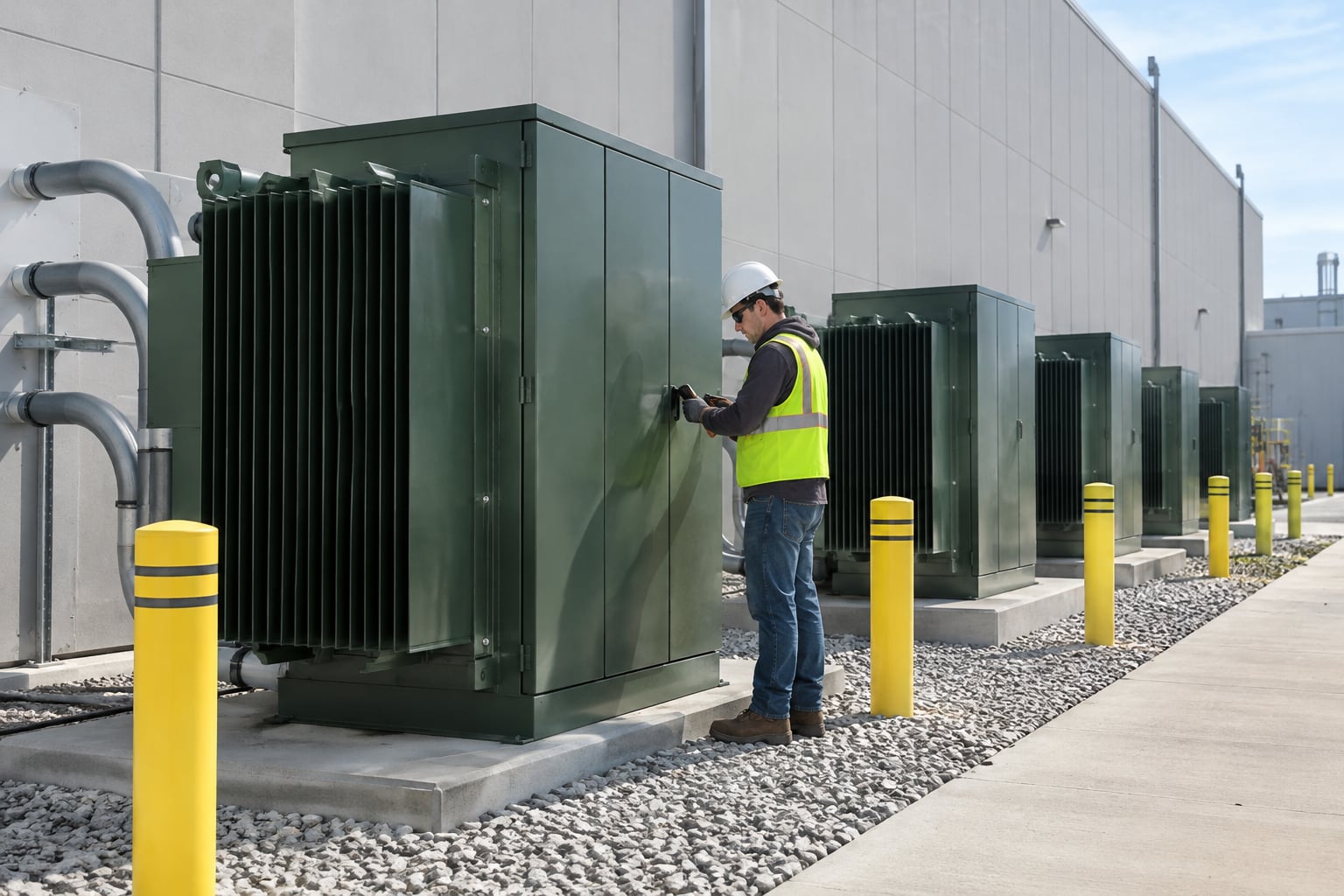
The Blackstone Digital Infrastructure Trust (BXDC), a newly public real estate investment trust focused on data centers, has finalized an agreement with Amazon Web Services (AWS) to acquire 75% of two joint ventures owning 13 newly constructed data center facilities. The transaction was announced on Monday, November 16, and values the portfolio at approximately $5 billion, with an initial capitalization rate of 7%, according to the press release attached to BXDC's Form 8-K filed with the SEC. According to the summary of the document, the exact stake is 75.1%, while AWS retains 24.9%.
The assets are located across two AWS campuses: nine buildings in northern Indiana and four in Mississippi. AWS is leasing back the entire portfolio on a triple net basis, with an initial term of 12 years, extendable up to 32 years, and an annual rent adjustment of 2.75%, according to the 8-K summary. This marks BXDC's first investment since its IPO, and the expectation is to close the deal by the end of the fourth quarter.
The Hyperscaler Becomes a Tenant of Its Own Building
The structure represents a classic sale-leaseback applied to AI infrastructure. Amazon removes three-quarters of a fixed asset from its balance sheet, receives cash, and continues to operate the servers. Blackstone acquires a long-term rental stream paid by one of the highest credit-rated companies globally. The "powered shells" refer to the shell with power, cooling, and connectivity; the GPUs and servers remain owned by AWS.
"This direct agreement with Amazon creates a roadmap for more operations of this type with hyperscalers or developers," said Nick Pell, CEO of BXDC, according to reports from the fund's earnings conference call. This statement encapsulates the thesis: infrastructure capital wants to own the property and lease contract without bearing the risk of chip obsolescence, which stays with AWS.
Who Assumes the Risk
The less obvious aspect of the deal lies in the leverage. The joint venture is committed to financing covering half of the purchase price at closing. Based on the disclosed rate, a $5 billion portfolio at 7% implies approximately $350 million in net operating income in the first year, adjusted annually at 2.75%. For the fund investor, the return relies almost entirely on AWS continuing to make payments for 12 years.
This represents the exact type of exposure highlighted by the Federal Reserve in its Financial Stability Report released last week: debt linked to advanced computing infrastructure rose to $680 billion in October, compared to just $130 billion for the entire year of 2023, according to the report coverage. The critical distinction here is that the tenant of BXDC is a profitable hyperscaler, not a laboratory burning venture capital. Credit risk is low; demand risk, if AWS requires less capacity in 2035, largely shifts to the building owner.
The Same Model in Other Markets
In the United Kingdom, Blackstone already has the most visible piece of this strategy: the QTS campus in Cambois, Northumberland, a £10 billion project with planning approval expected in March 2025 and completion projected for 2028. Should BXDC replicate the buy-and-lease model with hyperscalers outside the U.S., Cambois is a natural candidate, and the British government has already designated the area as an AI Growth Zone.
In Brazil, AWS announced in September 2024 investments of BRL 10.1 billion by 2034 to expand data centers in São Paulo, a figure inclusive of construction, operations, and energy. The agreement with Blackstone demonstrates a viable financing alternative for such expansion: instead of immobilizing all capital, the hyperscaler can build, sell most of the property to a fund, and lease it back. For Brazilian real estate and infrastructure funds, which already purchase logistics warehouses with atypical long-term contracts, this U.S. operation serves as a direct precedent for structure and pricing.
For the CFO of a cloud client company, the signal is different. AWS is freeing up fixed capital to spend where margins are higher, namely on chips and AI services, treating the building as a financeable commodity. When the hyperscaler determines that the property is not a strategic asset, negotiating colocation and private cloud contracts with local providers acquires a new benchmark: a 7% capitalization rate for a top-tier credit tenant.
Sources
- sec.govhttps://www.sec.gov/Archives/edgar/data/0002100161/000119312526461954/d115778dex991.htm
- irishtimes.comhttps://www.irishtimes.com/business/2026/11/16/blackstone-reit-to-buy-amazon-data-centres-in-5bn-deal/
- qz.comhttps://qz.com/blackstone-amazon-data-centers-majority-stake-111626
- commercialsearch.comhttps://www.commercialsearch.com/news/blackstone-jv-to-acquire-5b-data-center-portfolio/
- stocktitan.nethttps://www.stocktitan.net/sec-filings/BXDC/8-k-blackstone-digital-infrastructure-trust-inc-reports-material-even-248ccdd8315f.html