Accenture and Dell Launch AI Group for Private Infrastructure
Accenture and Dell launched a joint unit to implement AI in banks, pharmaceuticals, and industries with 3,000 professionals to train. The equation changes with high memory costs and data regulations in the UK, EU, and Brazil.
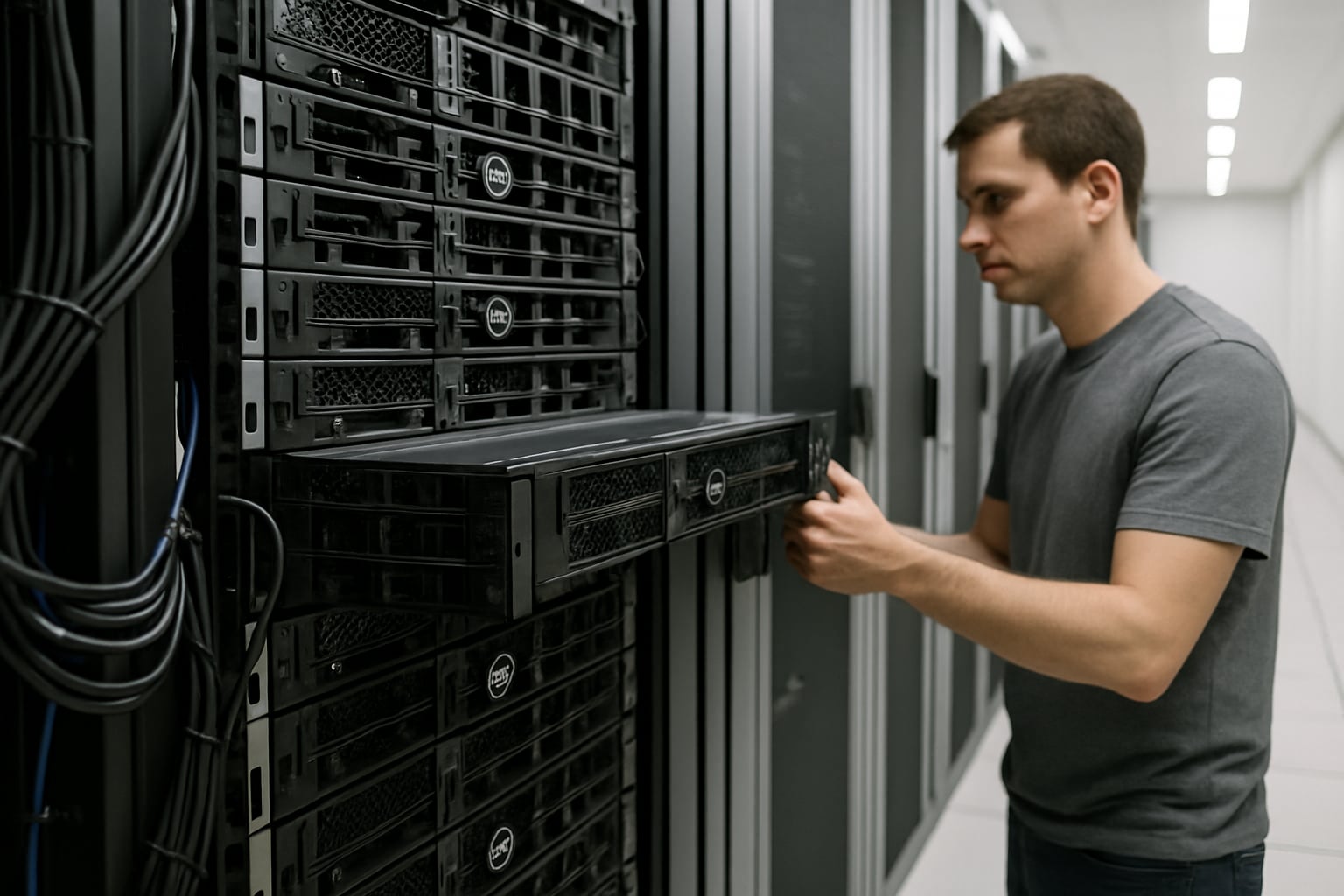
Accenture and Dell Technologies announced on Thursday (8) the creation of the Accenture Dell Business Group, a joint unit aimed at helping large enterprises run artificial intelligence on private infrastructure, outside of public clouds. According to the companies' statement, Accenture will train over 3,000 professionals on Dell's portfolio, in a partnership that spans over 20 years.
The declared focus is on five sectors: financial services, life sciences, manufacturing, industry, and high technology. The offering encompasses private AI solutions and neocloud, integrated stacks of private AI, accelerated deployment of agents, and support for open models and weights. Dell contributes servers, storage, and services, while Accenture provides strategy and implementation.
The Bet Is on Regulated Customers
The target is companies that want AI at scale but cannot, or do not want, to send sensitive data to a hyperscaler. The announcement describes the proposal as a complement, not a substitute, for these clients' cloud strategy.
Julie Sweet, CEO of Accenture, framed the move as a transition from ambition in AI to execution at scale with measurable business outcomes. Michael Dell, founder and CEO of Dell, emphasized transitioning companies from interest to adoption. The first referenced client is the UK-based RHAELM. Its CEO, Bradd Lewis, credited both companies with the ability to implement sovereign AI at scale for clients in highly regulated sectors.
One point not addressed in the statement is timing. The 3,000 professionals have yet to be trained, as noted in part of the coverage, and Accenture did not disclose revenue targets for the group.
Hardware Costs Rise Simultaneously
The announcement coincides with Samsung Electronics estimating an operating profit of 107.4 trillion wons in the third quarter, the first time exceeding 100 trillion in the company's history, fueled by rising prices of DRAM and HBM memory. The same cycle that fills the pockets of chip manufacturers increases the price of every AI server that a bank or a pharmaceutical company decides to purchase instead of rent.
This is where the cost equation for the customer shifts. In the public cloud, the price variance for memory is diluted in the hourly rate. In private infrastructure, it impacts the entire capital budget. Accenture and Dell market "more predictable savings", as stated in the release, but predictability in private infrastructure depends on locking in hardware prices at the time of purchase.
The demand for private environments also depends on more than just cost. For a bank or pharmaceutical company, the pressing variable is legal: who is responsible for the data when an AI agent processes it, and in which jurisdiction it is physically stored. Of the five sectors the group identifies as priorities, at least two, financial services and life sciences, operate under rules of data residency and traceability in virtually all relevant markets.
Where Supply Meets Demand
In the UK, the RHAELM case showcases the buyer profile: companies serving regulated clients that need to prove where the data is and who processes it. The term "sovereign AI" has become a selling point specifically in this market.
In Germany and the rest of the European Union, discussions about digital sovereignty and the phased enforcement of the AI Act are pushing banks, insurers, and industries towards architectures where the model runs within the company's perimeter. For competing consulting firms, the message is that Accenture aims to reach this client with hardware already factored into the proposal.
In Brazil, banks and payment institutions operate under CMN Resolution No. 4,893, which requires communication to the Central Bank and specific clauses in cloud processing and storage contracts. It’s a compliance cost that favors part of the AI load remaining in a private environment, and a market where both Accenture and Dell already have local operations.
The move also signals something about the competition among integrators. TCS announced the same day an annualized AI revenue of $3.1 billion. Accenture, which also appeared the same day as a founding partner of Anthropic's critical infrastructure defense program, chose to tie its offering to a hardware manufacturer. The bet is that for the regulated customer, the question has shifted from which model to use to which machine it will run on.
Sources
- newsroom.accenture.comhttps://newsroom.accenture.com/news/2026/accenture-and-dell-technologies-expand-collaboration-to-help-enterprises-scale-private-ai-and-modernize-infrastructure
- investing.comhttps://www.investing.com/news/company-news/accenture-and-dell-form-business-group-to-scale-ai-deployment-93CH-4938774
- cnbc.comhttps://www.cnbc.com/2026/10/08/samsung-q3-earnings.html
- en.sedaily.comhttps://en.sedaily.com/finance/2026/10/08/samsung-electronics-posts-record-107-trillion-won-quarterly