Canva's 22% Workforce Shakeup and Perkins' Vision
Melanie Perkins' memo impacts 1,271 employees, 22% of the team, amid Canva's first slowdown in a decade. The text does not attribute cuts to AI, but the design market has shifted.
Canva will restructure its operations, impacting 1,271 employees, about 22% of the workforce, according to a memo sent by co-founder and CEO Melanie Perkins to the team on Wednesday, November 4. "Our growth has slowed for the first time in a decade," wrote Perkins, who described 2026 as the company's "toughest year". For her, Canva needs to be "refounded".
This number does not equate to total layoffs. The 1,271 include employees who will change roles or be invited to relocate. The company has not disclosed how many positions will be eliminated.
What Changes in Structure
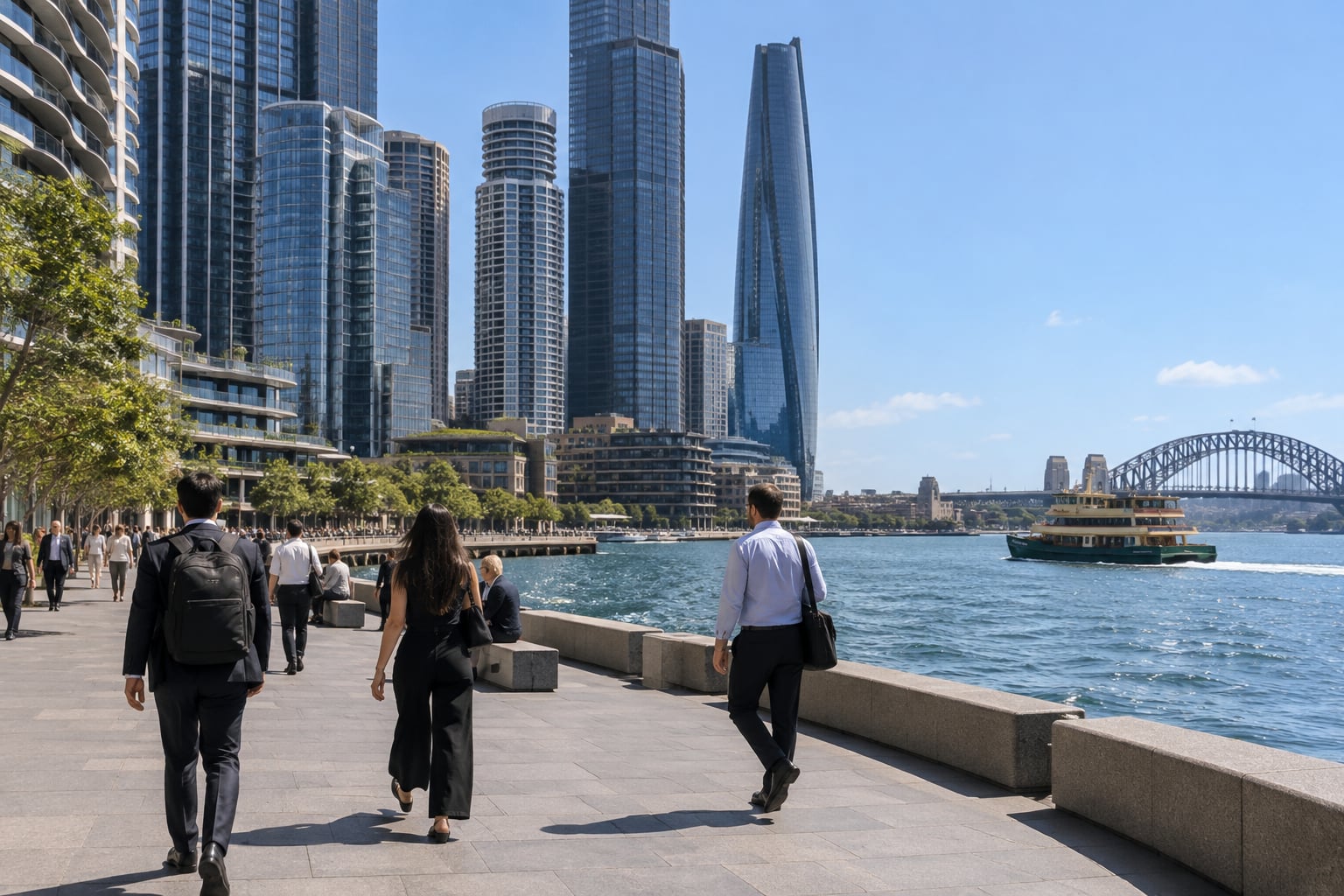
Canva will merge the Product, Growth, and Platform areas into a single product organization and remove layers of management, according to the memo. Perkins described the target model as small teams, with less handoff between areas. Sydney will become the primary base for more product teams, and starting in January, most hybrid employees will need to come to the office two to three days a week.
The severance package for those leaving is more generous than the industry standard: at least six months of salary, 12 months of health insurance where the company currently offers it, the work laptop, and the opportunity to apply for a $10,000 grant from a new fund, the Canva Collective Fund, to start a business.
AI Mentioned in the Memo, and Beyond
Part of the media has associated the restructuring directly with artificial intelligence. The memo, as reproduced by the media, including Forbes, does not attribute the cuts to AI. Perkins acknowledges that technology is changing what people create, and Forbes reported that the decision came after months of reflection on how new technologies and AI are reshaping the world. The stated reason is the slowdown in growth.
Both readings do not exclude each other. Canva sells design tools to non-designers, which is exactly the audience that now generates images, presentations, and direct marketing pieces using generalist AI assistants. At the same time, the company itself is heavily investing in Canva AI 2.0, in alpha testing since April, with agents performing recurring design tasks in the background. Perkins stated that the cost per AI task has dropped almost 90% since the launch of this version. A company that reduces AI costs by 90% while simultaneously slowing down is competing in a market where the cost of tasks decreases for all, including competitors.
Where the Cuts Land
Canva has not disclosed the distribution by country, and the absence of this data is in itself informative for those monitoring distributed operations. In Australia, the concentration of product teams in Sydney indicates that the headquarters gains relative weight, even with the global cuts. In the Philippines, where Canva's operation in Manila already exceeded 900 people in 2024, local media reports that the company has not yet disclosed how many Filipino employees were affected. In the UK, the London campus, the base of European expansion, is undergoing the same structural review without disclosed numbers. In the U.S., where Canva competes for corporate accounts with Adobe and Figma, the merger of Product, Growth, and Platform reorganizes the areas that support this competition.
This pattern is of interest to CIOs and consulting partners for a practical reason. With 22% of the workforce under review, Canva joins the group of software companies that grew by hiring in lower-cost hubs and are now reevaluating team structures under the argument of smaller teams and fewer layers. When the decision is accompanied by a return to the office and concentration at headquarters, the net effect tends to fall on remote hubs, even if the announcement mentions "role changes".
Canva is not publicly traded and does not publish audited results, leaving the market without the most crucial number: how much revenue has slowed. Perkins chose to speak of "refounding" instead of "restructuring," and the vocabulary carries weight. A refounding promises a different product, and the test will be whether Canva AI 2.0 emerges from alpha testing with its own revenue before generalist assistants absorb the users that Canva has spent 13 years acquiring.
Sources
- forbes.comhttps://www.forbes.com/sites/iansayson/2026/11/04/billionaire-couple-led-canva-plans-job-cuts-as-part-of-business-overhaul-amid-slowdown/
- techrepublic.comhttps://www.techrepublic.com/article/news-canva-restructure-1271-workers-layoffs/
- foxbusiness.comhttps://www.foxbusiness.com/economy/canva-restructuring-affect-22-workforce-growth-slows
- manilatimes.nethttps://www.manilatimes.net/2026/11/05/business/foreign-business/canva-restructuring-to-reduce-workforce/2462028
- rollingstonephilippines.comhttps://rollingstonephilippines.com/state-of-affairs/canva-restructuring-layoffs-new-technology/