HSBC May Cut 70% of UK Wealth Advisors, Says FT
According to the FT, HSBC could cut half of its managers and about 70% of wealth advisors in the UK. AI is moving to the forefront, yet the bank's own research shows affluent clients still prefer people.
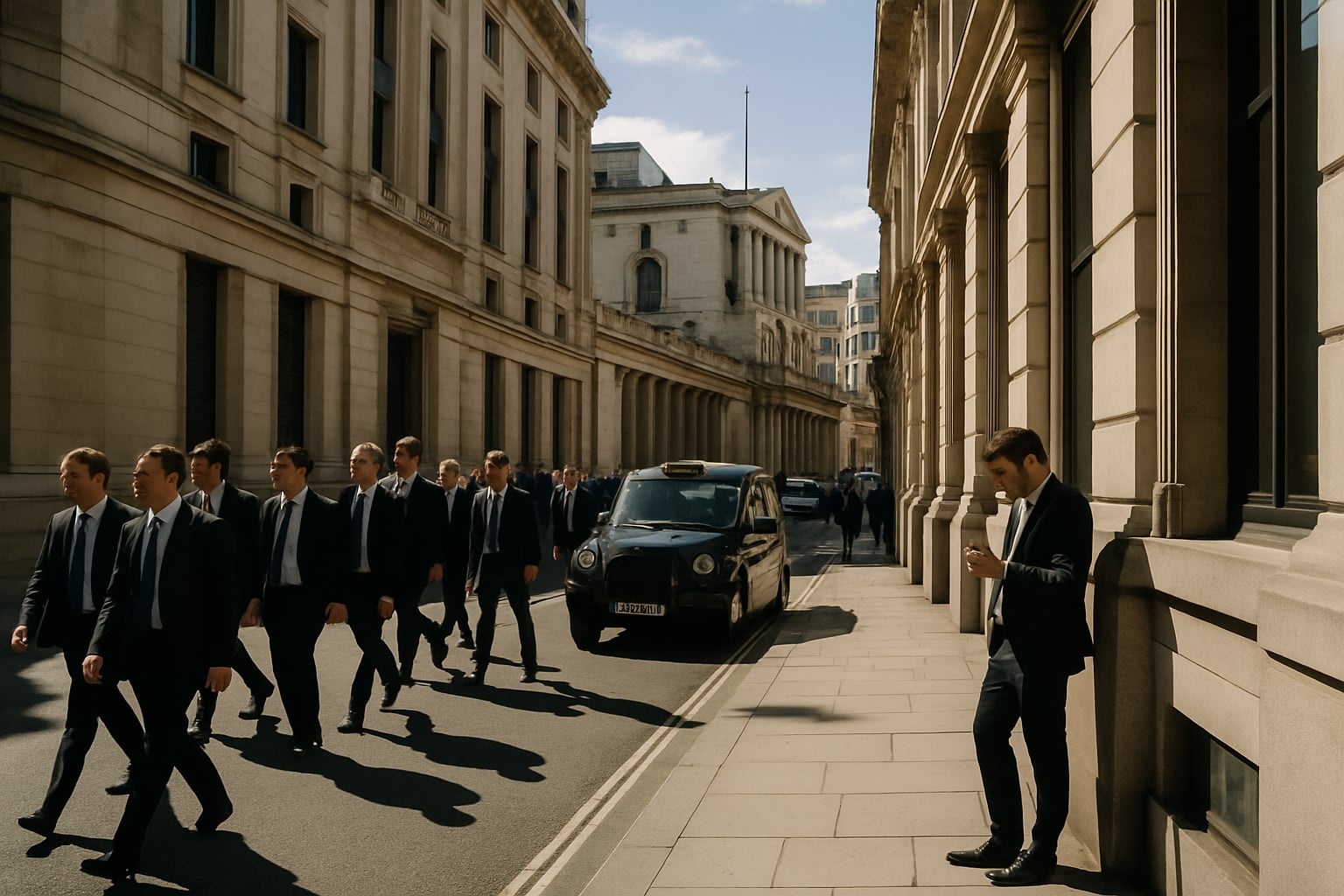
HSBC plans to eliminate about half of the management and specialist roles in its wealth management division in the UK, with the number of financial advisors potentially dropping by nearly 70%, according to a Financial Times report published on Wednesday (7) and reported by Reuters. The bank is currently consulting with affected employees, who are expected to leave the institution by the end of October. HSBC has not confirmed the percentages. In a statement, it said that HSBC UK is "an established and leading wealth manager in the UK" and continues to evolve to offer more digital products and services.
The cuts have a particular distinction from those announced by banks in the past two years. Until now, AI had been encroaching through the back end: back office, compliance, call centers. Now it is reaching the role that banks considered protected, the advisor who meets the high-net-worth client face-to-face. According to Angeline Ong, senior technical analyst at IG, this case illustrates AI "moving up the value chain" into customer-facing roles.
The Size of the Bet
The UK move is part of a larger trend. In March, Bloomberg reported that HSBC was considering changes that could affect around 20,000 positions, close to 10% of its global workforce, over the next three to five years. The bank had 208,720 full-time employees at the end of 2025, according to the annual report. At that time, the report pointed to non-customer-facing roles in global service centers as the most exposed. In May, CEO Georges Elhedery had already warned employees that generative AI would destroy certain jobs.
The unsettling detail emerged a day before the cuts. The 2026 Evident AI Index, released on Tuesday (6), downgraded HSBC from 8th to 11th place among the 50 largest banks in the world in terms of AI maturity. UBS, in 6th place, was the only European bank in the top ten. JPMorgan leads for the fifth consecutive year.
The Counterargument
The strongest objection comes from HSBC's own research. The Trust Threshold study, published by the bank in June with around 10,000 affluent and high-net-worth investors in 10 markets, concluded that while these clients are increasingly using AI, they still rely on professionals for judgment, context, and accountability. Only 12% stated that AI was the most influential factor in their last investment decision. Columnist Sheila Callaham, writing for Forbes, pointed out the contradiction: the bank is cutting advisors while its clients say they want human interaction.
There is also evidence that weakens the thesis that the cuts reflect technological maturity. The same Evident Index shows that only 12 of the 50 evaluated banks reported realized or projected returns from their AI initiatives, up from 8 a year before. And the bank that is accelerating the replacement of advisors is precisely the one that has lost positions in the ranking.
The two symmetrical errors are clear. One is reading the cuts as proof that AI already replaces the wealth advisor. The other is treating it as a common cost-cutting measure with a technological veneer. The available data does not support either. A more useful axis is this: who takes responsibility for the recommendation when the advisor leaves the room. In the UK, financial advice carries regulatory duties of suitability, and the FCA's Consumer Duty, effective since 2023, requires the bank to demonstrate good outcomes for the client. Automating the recommendation does not eliminate this duty; it merely shifts who has to document it.
Where the Impact Reaches
In the UK, the cuts test whether a retail bank can retain affluent clients with less human contact. In Hong Kong, HSBC's main market and where wealth management is the group's declared growth bet, the question is whether the UK model will be exported or if Asia will continue to prioritize personal service as a differentiator.
In India and Poland, where HSBC maintains large global service centers, the risk is of a different nature. These are the positions that Bloomberg's March report indicated as the most exposed. If AI is now reaching the front lines in London, the back offices in Hyderabad or Krakow are no longer the first line of cuts and will compete for space with the same agents replacing the advisor.
The next checkpoint is the third-quarter balance sheet, set for October 27. For Ong, it will show whether the cuts appear as credible efficiency or as a client retention issue. The metric to watch is not the bank's efficiency ratio but the net inflow of British wealth in the following quarters, the only number capable of indicating whether the client has accepted the change.
Sources
- computerweekly.comhttps://www.computerweekly.com/news/366651817/HSBC-cuts-wealth-management-roles-as-AI-increasingly-services-customers
- live.euronext.comhttps://live.euronext.com/en/financial-news/hsbc-plans-job-cuts-across-uk-wealth-business-ai-push-ft-reports-0
- forbes.comhttps://www.forbes.com/sites/sheilacallaham/2026/10/07/hsbc-to-cut-advisors-even-while-investors-want-human-judgment/
- evidentinsights.comhttps://evidentinsights.com/insights/banks-ai-index-2026-report
- outlookbusiness.comhttps://www.outlookbusiness.com/corporate/hsbc-considers-to-cut-10-workforce-in-multi-year-ai-overhaul