Oracle to Offer Google TPUs on OCI in 2027, Expands Nvidia
At Oracle AI World, the company announced it will be the first hyperscale cloud outside Google to sell TPUs starting in 2027, alongside Nvidia's Vera Rubin. Cerebras arrives the same year. Pricing and regions remain unclear.
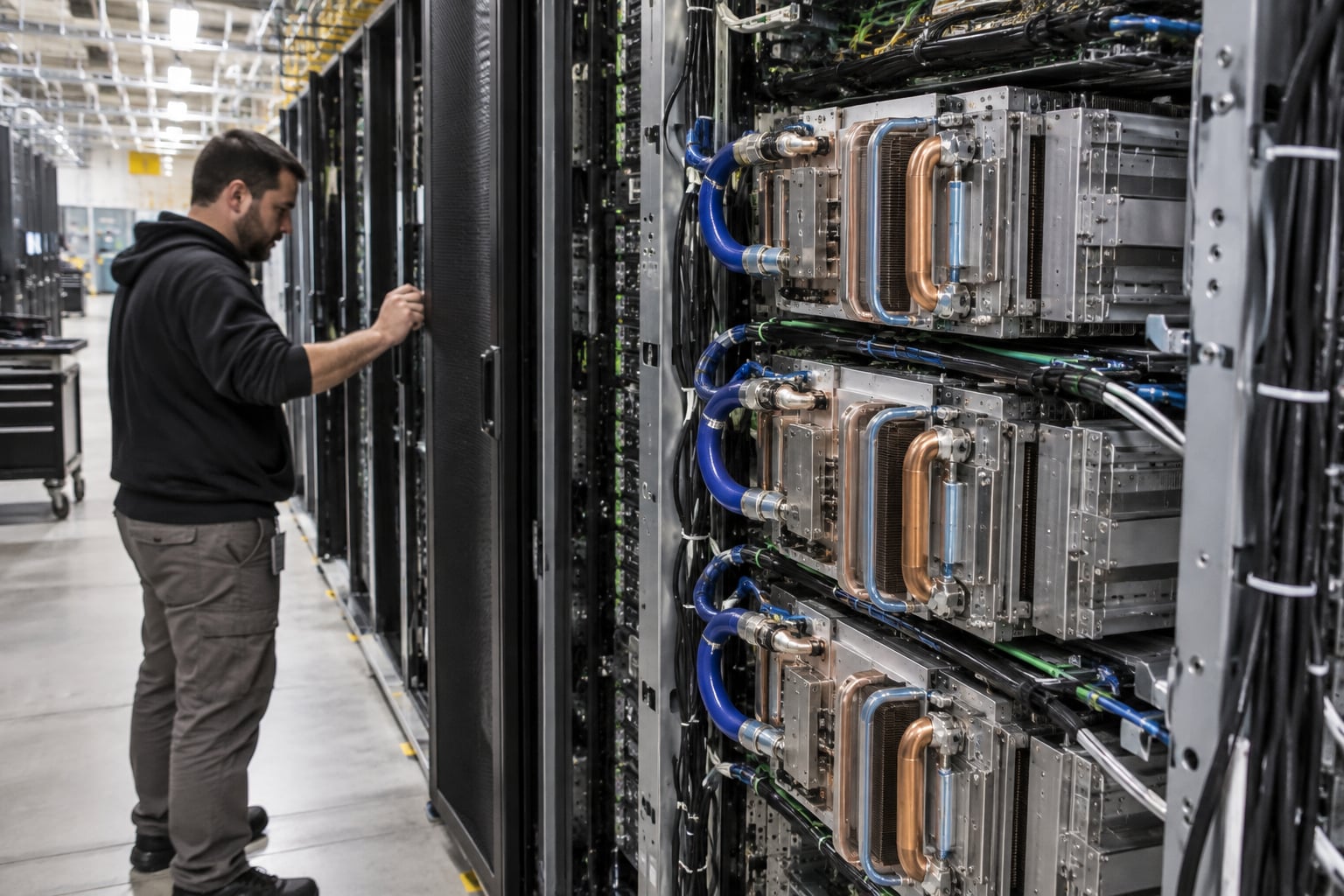
Oracle announced on Tuesday (27), during the Oracle AI World in Las Vegas, that it will offer Google TPUs on the Oracle Cloud Infrastructure (OCI) starting in 2027. According to the joint statement, OCI will be the first hyperscale cloud outside of Google itself to sell access to the accelerators. On the same stage, the company declared the commercial availability of Nvidia's Vera Rubin NVL72 systems and Vera CPUs, stating it will scale its superclusters with this generation into multiple gigawatts.
The third name on the list was Cerebras. Oracle informed that the inference technology from the manufacturer will also reach OCI in 2027. In one afternoon, one of the largest purchasers of Nvidia systems began to promise three competing AI architectures in the same catalog.
What's in the Catalog
According to the announcement, Google will make the eighth generation of its TPUs available on OCI, divided into two chips: the TPU 8t, aimed at training, and the TPU 8i, aimed at inference. Oracle provides power, cooling, and the data center network. Availability begins in the calendar year 2027 and grows over several years, according to the statement released by the two companies.
Mahesh Thiagarajan, president of OCI, defended in the statement the idea of giving customers access to multiple leading architectures within the same cloud. Amin Vahdat, Senior Vice President and Chief Architect of AI and Infrastructure at Google, stated that the agreement expands the number of organizations with access to TPUs.
On Nvidia's side, Oracle states in its technical blog that Vera Rubin delivers up to 30 times more inference throughput per watt and four times the training performance of the Blackwell generation. These are vendor numbers, with no independent measurement published. OpenAI appears among the first customers with access to Vera CPUs on OCI, according to the joint statement from Nvidia and Oracle.
None of the announcements provided contract values, megawatt capacity per supplier, or financing methods.
Why Oracle Welcomes Nvidia Rivals
Reuters' reading, replicated by agencies, was straightforward: Oracle expands the deal with Nvidia while at the same time diversifying with competitors. For Google, the operation has its own logic. Until now, anyone wanting TPU needed to contract Google Cloud. In October 2025, Anthropic announced a deal to use up to 1 million TPUs within Google’s cloud. Starting in 2027, the same family of chips will be sold within a cloud that competes with Google Cloud for corporate accounts.
The counterargument deserves weight. For Nvidia, Oracle remains one of the largest buyers of Vera Rubin, and the announcement of multi-gigawatt scale is exactly the type of commitment that supports the manufacturer’s portfolio. TPU and Cerebras will only arrive in 2027, while Vera Rubin is already available. Those who see the announcement as the end of dependency on Nvidia ignore the timeline. Those who treat diversification as cosmetic ignore that Oracle accepted hosting a competitor's chip in its cloud.
The distinction that matters for corporate buyers lies on a different axis. Training frontier models remains concentrated in a few labs. Running inference at scale, which is where the AI budget of banks, insurers, and retailers resides, is the market where price per token and energy consumption weigh more than fidelity to an architecture. TPU 8i and Cerebras were announced specifically for inference.
Where Chip Choices Reaches the Customer
In the United States, the most immediate effect is on contracts with large labs. With OpenAI already a customer of Vera CPUs, OCI is set to contend for workloads that today divide space between Azure, Google Cloud, and AWS, now with the option to mix architectures without switching providers.
Outside the U.S., the question for CIOs is geographical. Oracle operates cloud regions in São Paulo and Vinhedo, Brazil, and in Mumbai and Hyderabad, India. Tuesday’s announcements did not specify in which regions TPUs, Cerebras systems, or Vera Rubin superclusters will be installed. For a Brazilian bank subject to Central Bank rules for cloud contracting, or for an Indian integrator delivering AI projects to American clients from Bangalore, the difference between a TPU in Ohio and a TPU in São Paulo is the difference between pilot and regulated production.
Until Oracle details the geographical distribution, the announcement expands the chip menu without indicating where it will be served. For those negotiating multi-year cloud contracts, this is the clause to inquire about before 2027.
Sources
- oracle.comhttps://www.oracle.com/news/announcement/ai-world-nvidia-and-oracle-expand-nvidia-vera-rubin-to-multi-gigawatt-scale-2026-10-27/
- cloud.google.comhttps://cloud.google.com/blog/products/infrastructure/bringing-google-tpus-to-oracle-cloud-infrastructure
- blogs.oracle.comhttps://blogs.oracle.com/cloud-infrastructure/nvidia-vera-rubin-vera-cpus-oci
- datacenterdynamics.comhttps://www.datacenterdynamics.com/en/news/nvidia-vera-rubin-and-vera-cpus-now-generally-available-on-oracle/
- techwireasia.comhttps://techwireasia.com/2026/10/oracle-ai-chips-google-nvidia-cerebras/