Intel Acquires Classiq to Enhance Quantum Stack
Intel has finalized the acquisition of quantum software firm Classiq; reports suggest a deal worth between $2.2 and $2.3 billion. The goal is to integrate Classiq's platform with Intel's silicon spin qubits.
Intel announced on Monday, October 26, an agreement to acquire Classiq, an Israeli company specializing in quantum computing software. The company did not disclose the acquisition price, but Israeli media reports vary slightly: Calcalist and Haaretz mention around $2.3 billion, while Globes and SiliconANGLE cite $2.2 billion. The deal is expected to close in the first half of 2027, pending regulatory approvals.
In either case, the price is significantly lower than Intel's largest acquisitions, such as Altera for $16.7 billion in 2015 and Mobileye for $15.3 billion in 2017. However, it exceeds twice the amount IonQ paid for British firm Oxford Ionics in 2025.
What Intel is Buying
Classiq offers a quantum circuit synthesis platform: developers describe the problem at a high level, and the software generates the optimized circuit for the target hardware. According to Intel's announcement, the aim is to merge this layer with the silicon spin qubits the company has been developing for over a decade, transforming the Quantum Computing Group into a full-stack business, from chip to code.
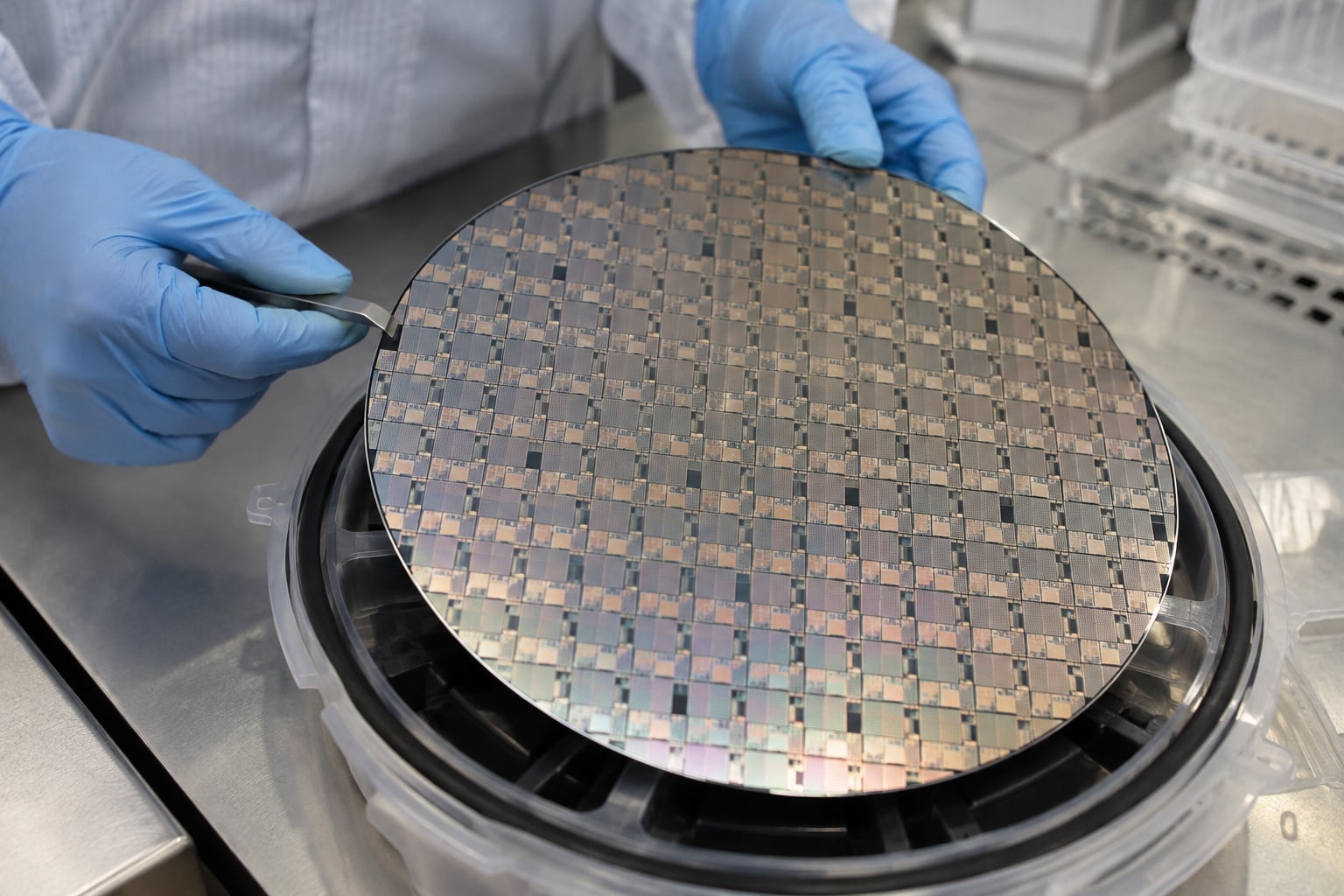
The choice makes industrial sense. Intel's spin qubits are manufactured using the same semiconductor tooling at its Hillsboro, Oregon factories, a scale bet that IBM and Google, with superconducting qubits, and Quantinuum and IonQ, with trapped ions, do not make. What Intel lacked was the layer where enterprise customers actually operate. Classiq fills that gap and, according to the announcement, will remain hardware-agnostic, maintaining integrations with third-party platforms post-closure.
The commitment to neutrality is the clause that is of most interest to existing users of the tool. If Intel prioritizes its own hardware, clients currently running Classiq circuits on IBM or IonQ machines will need to reassess their supplier. Intel states it will not do this, and the promise can only be tested after 2027.
An Investor CEO and a Reconstructing Intel
CEO Lip-Bu Tan was among the early investors in Classiq, according to reports from SiliconANGLE and Israeli media. For a board that has been under pressure for capital discipline since the U.S. government's entry into the firm's capital in August 2025, acquiring approximately 10% of the shares, this governance detail matters as much as the price.
The acquisition also contrasts with the cost-cutting rhetoric Tan adopted upon taking office in March 2025. Intel has reduced its workforce, sold a majority stake in Altera, and delayed factory projects. Spending nearly $2.3 billion on a startup without significant revenue indicates that leadership views quantum computing as a long-term option worth protecting, even with cash pressures.
There are legitimate skeptical readings. No quantum computer currently solves a corporate problem more cheaply than a classical cluster, and the sector itself anticipates practical advantages by the end of the decade. On the other hand, IonQ paid $1.075 billion for Oxford Ionics, and Quantinuum was valued at $10 billion in a September 2025 funding round: the market is already pricing platforms, not lab promises.
Israel, the United States, and the Corporate Buyer
In Israel, the acquisition deepens the presence of a company already maintaining design centers in Haifa and a factory in Kiryat Gat, bringing within Intel a quantum software team formed outside the American academic circuit. For Tel Aviv startups, it validates that quantum software can yield billion-dollar exits without relying on proprietary hardware.
In the United States, the acquisition ties Intel’s quantum stack to technology produced on American soil, a crucial argument for Washington since the CHIPS Act. Regulators will likely scrutinize the vertical integration closely since Classiq serves clients who use competitors’ hardware.
For the CIO of a bank or industry maintaining a quantum pilot, the practical question changes. Until yesterday, choosing Classiq meant choosing a neutral layer. Post-closure, it becomes a choice of an Intel layer that promises to remain neutral. Architecture teams in New York, Frankfurt, or São Paulo that standardized this tool over the past two years gain a financially stronger supplier and a new item for their concentration risk matrix.
Sources
- intc.comhttps://www.intc.com/news-events/press-releases/detail/1784/intel-to-acquire-classiq-to-create-a-full-stack-quantum
- siliconangle.comhttps://siliconangle.com/2026/10/26/intel-buys-quantum-software-pioneer-classiq-for-2-2b/
- haaretz.comhttps://www.haaretz.com/israel-news/tech-news/2026-10-26/ty-article/.premium/intel-to-acquire-israeli-quantum-computing-startup-classiq-in-2-3-billion-deal/000001a1-79e2-d682-a7af-79e63a070000
- bloomberg.comhttps://www.bloomberg.com/news/articles/2026-10-26/intel-to-buy-israeli-startup-classiq-in-quantum-computing-push
- quantumcomputingreport.comhttps://quantumcomputingreport.com/intel-to-acquire-classiq