Citi Downgrades US to Neutral, Upgrades Europe on AI Slide
Citi strategists cut US and global tech ratings to neutral after $3 trillion loss in the S&P 500; Morgan Stanley and UBS see an overreaction and recommend buying the dip.
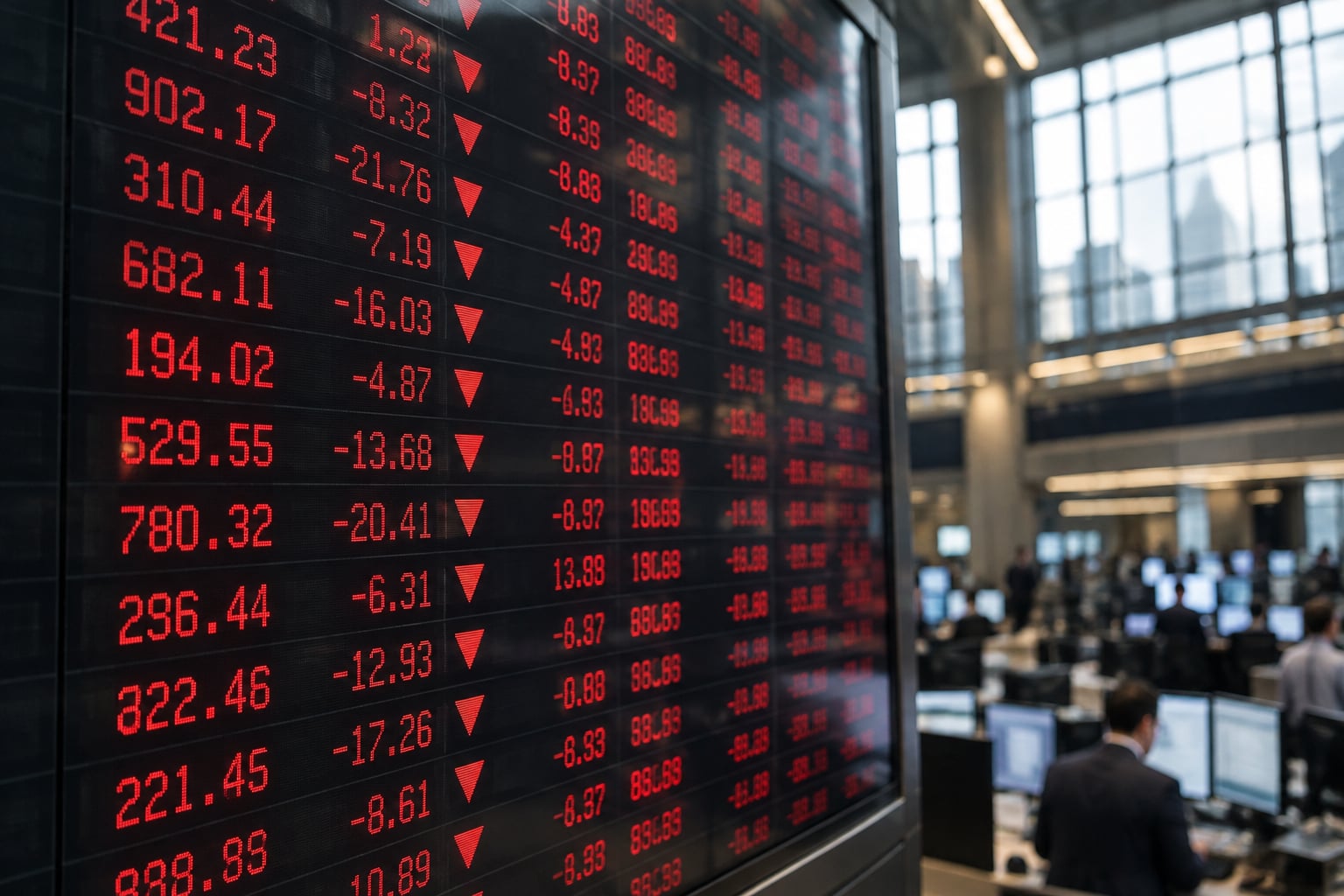
Citi downgraded its recommendation for U.S. stocks from "overweight" to neutral on Monday (9), citing the selloff driven by concerns over artificial intelligence spending and tougher regulation on data centers. In the same note, the strategy team led by Beata Manthey also downgraded global and European technology to neutral and upgraded European stocks, excluding the UK, to "overweight".
The downturn that prompted this change erased about $3 trillion in market value from S&P 500 companies, according to coverage from Reuters and Bloomberg on the note. The trigger was the result of the U.S. midterm elections on November 3: Democrats gained seats in states where opposition to building new data centers is growing, and investors began to price in limits on AI infrastructure expansion.
Citi's Argument is About Positioning
The note is not a bet against AI. Citi maintains a constructive view on the topic in the medium term and does not express pessimism about stocks in general. The concern lies in positioning: "We fear that positioning in key indices, such as the Nasdaq, could retreat to net short territory," the strategists wrote. The bank wants to see sentiment around AI stabilize before recommending exposure above average to the United States.
The same note upgraded global health and European food and beverage stocks from neutral to "overweight". These are defensive sectors with little correlation to the AI capex cycle, demonstrating that the proposed rotation is away from the topic, not into another tech bet.
Morgan Stanley and UBS See Overreaction
On the other side of the table, Morgan Stanley and UBS classified the selloff as excessive, according to Reuters. Morgan Stanley recommended "buying the dip" and maintained a positive outlook on hyperscalers Amazon, Meta, and Alphabet, arguing that extreme regulation on data centers is unlikely even with a Democratic-majority Congress. UBS stated that the market has reacted too negatively to political risk, credit risk, and AI spending levels.
Jane Gibbons, an equity analyst at Jefferies, described the November 5 drop as "reactive," a response to headlines rather than a reassessment of fundamentals. Optimists point to two upcoming tests: the IPO of Anthropic, which Morgan Stanley sees as the main catalyst for the coming weeks, and Nvidia's earnings on November 17, when the market anticipates over 12% growth in data center revenue compared to the previous quarter.
Citi's case has a weakness: downgrading based on positioning rather than earnings means that a single strong earnings report from Nvidia could dismantle the thesis in an afternoon. The optimists face another challenge: the political dispute over data centers is local, decided at the state and municipal levels for energy and land permits, and does not rely on federal law to delay projects.
The Rotation Seen from Outside the US
For Europe, Citi's recommendation is less a compliment and more an acknowledgment that the continent has little exposure to the risk that brought down New York. The downgrade of European technology to neutral, made in the same note, shows that the bank separates the two issues: companies in the region selling into the AI cycle, such as semiconductor equipment suppliers in the Netherlands and enterprise software in Germany, carry the same sentiment risk as their American counterparts. The UK was excluded from the upgrade.
For Asia, the transmission occurs through the supply chain. The data center revenue Nvidia reports on the 17th is, on the flip side, the revenue for chip and server manufacturers in Taiwan and South Korea, and delays in American projects will first impact these earnings.
In Brazil, direct exposure is small but not zero: multimarket and global mandate pension funds and investors in BDRs of Nvidia, Alphabet, and Meta absorb the same fluctuations, adjusted for exchange rates. For technology directors in Brazilian firms negotiating cloud contracts in dollars, the critical question is not a bank's recommendation, but whether the dispute over data center licenses in the U.S. will increase the costs of the capacity they purchase.
The divergence between Citi and Morgan Stanley is not about whether AI works or not. It's about who bears the waiting time: if projects slip a few quarters, the profitable hyperscaler finances the delay with its own cash, while the leveraged data center developer needs open credit markets. It’s in that second point that political risk becomes balance sheet risk.
Sources
- investing.comhttps://www.investing.com/news/stock-market-news/citigroup-downgrades-us-equities-to-neutral-on-ai-concerns-5012010
- finance.yahoo.comhttps://finance.yahoo.com/markets/stocks/articles/citi-strategists-cut-us-stocks-095547644.html
- thestar.com.myhttps://www.thestar.com.my/tech/tech-news/2026/11/09/wall-st-brokerages-say-ai-selloff-overdone-downplay-democrat-regulation-risks
- finance.yahoo.comhttps://finance.yahoo.com/technology/ai/articles/wall-st-brokerages-ai-selloff-153512898.html